
Dental disease doesn't stop at tooth pain. Inflammation in the tooth socket allows bacteria to enter the bloodstream, and from there the effects can reach well beyond the mouth.
Locally, this can lead to tooth root abscesses (pus-filled pockets), bone infection of the jaw, or softening of the jaw bone that leads to fracture.
The Four Grades of Dental Disease
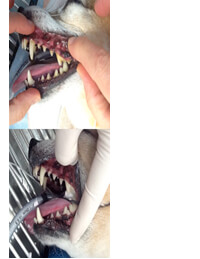
Grade 1
Visible plaque with no to very mild gingivitis.
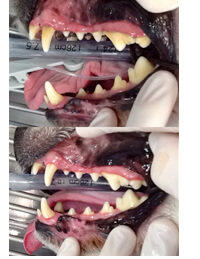
Grade 2
Calculus starting to form with mild gingivitis.
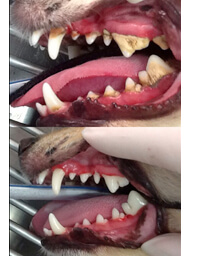
Grade 3
Significant build-up of calculus with moderate gingivitis.
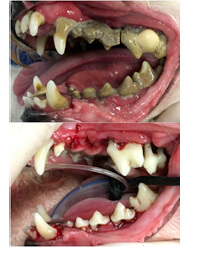
Grade 4
Severe periodontitis with significant pathology of the teeth — gum recession, furcation exposure, tooth root abscess.
Can dental disease cause problems in the body?
Bacteria entering the bloodstream travel to other areas of the body, where they can cause infection and inflammation. The three most affected areas are the heart, the liver, and the kidneys.
Heart disease and heart failure
Many of the bacteria found in the mouths of pets with dental disease are the same species associated with heart disease. They have been linked to both endocarditis — inflammation or infection of the interior of the heart — and valve disease in dogs and cats.
Liver and kidney disease
Both organs filter the blood, which is what allows bacteria from the mouth to spread to them so readily.

After dental care
If your pet still has teeth remaining, regular brushing is essential. Brush at least every three days using a veterinary-approved toothpaste and toothbrush.
A once-a-month brushing at the groomer is not enough to keep dental disease from progressing.
Dental chews often don't work if your dog finishes them in under five minutes — the chewing time is what does the cleaning.
Not sure what grade your pet is at?
An oral exam takes just a few minutes, and catching disease early is far easier than treating it later.